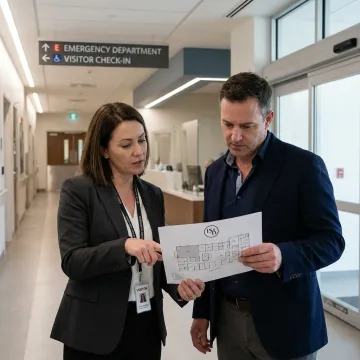
What are violence prevention programs?
Violence prevention programs are coordinated strategies designed to reduce threats, assaults, intimidation, and disruptive incidents before they escalate. In hospitals, they often include risk assessments, visitor management, staff training, emergency communication, reporting procedures, security design, and response protocols. Effective programs combine policy, physical security, operational readiness, and ongoing evaluation rather than relying on a single tool or training session.
What does hospital violence prevention training typically include?
Hospital violence prevention training commonly covers recognizing escalating behavior, reporting concerns, emergency communication, role-specific response procedures, lockdown or shelter guidance, and coordination with security staff. EMD’s work focuses on aligning training recommendations with the facility’s physical environment, visitor flow, emergency department risks, behavioral health considerations, and existing security operations.
How does EMD assess violence risk in a hospital?
EMD evaluates both physical and operational conditions, including entrances, emergency department access, behavioral health units, visitor management, surveillance, lighting, access control, emergency notification, staff procedures, and lockdown readiness. Findings are measured against realistic threat scenarios such as active assailant events, workplace violence, opportunistic crime, disruptive visitors, and after-hours access risks.
Can these services support Joint Commission environment-of-care requirements?
Yes. EMD’s healthcare consulting addresses workplace-violence prevention and physical security considerations relevant to hospital environment-of-care planning. While each organization remains responsible for its own compliance program, EMD helps identify gaps, prioritize improvements, strengthen documentation, and align security recommendations with practical hospital operations and recognized healthcare risk concerns.
Which hospital areas should be prioritized for violence prevention?
High-priority areas often include emergency departments, behavioral health units, waiting rooms, infant and pediatric spaces, medication storage areas, public entrances, parking areas, after-hours access points, and multi-building campus pathways. EMD prioritizes areas based on exposure, operational vulnerability, patient flow, staffing patterns, access control, and the potential impact of a security incident.
Do you provide physical security design as part of prevention planning?
Yes. EMD provides design consulting for access control, visitor management, surveillance layout, intrusion detection, lighting, emergency notification, perimeter security, helipad access, and specialized healthcare areas. Recommendations are designed to support safety without disrupting care delivery, patient dignity, staff workflow, or the hospital’s need to remain accessible.
Can hospitals use grants to fund violence prevention improvements?
Some healthcare facilities may be eligible for federal or state funding that supports physical security enhancements, training, emergency communications, access control, surveillance, or related target-hardening measures. EMD helps eligible organizations prepare vulnerability assessments, narratives, budgets, worksheets, application packages, and post-award documentation to connect identified risks with fundable improvements.
How long does a hospital violence prevention engagement take?
Timelines vary by facility size, campus complexity, service scope, and whether grant support is included. A focused assessment may move quickly, while multi-building hospitals, behavioral health environments, design coordination, and grant administration can require a longer phased approach. EMD uses a structured process with clear findings, priorities, and implementation guidance.