What do Homeland Security Consulting Services include?
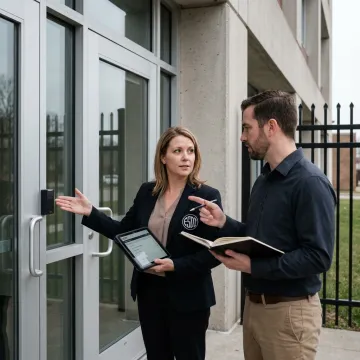
Homeland Security Consulting Services from EMD focus on physical and operational security for institutions. Services can include vulnerability and risk assessments, CPTED consulting, security design, access control planning, surveillance review, emergency notification strategy, grant application support, post-award grant administration, and expert witness work. EMD does not provide cybersecurity or IT-security architecture under these physical security consulting scopes.
Who does EMD typically serve?
EMD works with organizations responsible for protecting people, facilities, assets, and public trust. Common clients include K-12 schools, higher education campuses, houses of worship, nonprofits, museums, cultural institutions, historical landmarks, healthcare facilities, hospitals, transit authorities, and corporate campuses. Services are tailored to each sector’s operational realities, such as congregant flow, student movement, visitor management, artifact protection, or emergency department access.
What happens during a vulnerability and risk assessment?
A vulnerability and risk assessment evaluates physical infrastructure and operational procedures. EMD reviews perimeter conditions, access control points, doors, windows, locks, lighting, CCTV coverage, intrusion detection, visitor management, lockdown procedures, staff training, emergency notification, and relevant threat scenarios. The result is a prioritized set of recommendations that can guide security design, grant funding, implementation planning, or leadership decision-making.
Can EMD help with NSGP or SVPP grant applications?
Yes. EMD supports Nonprofit Security Grant Program applications for eligible 501(c)(3) nonprofits and houses of worship, as well as COPS School Violence Prevention Program applications for K-12 schools. Support may include vulnerability assessments, threat narratives, investment justifications, budgets, state worksheets, full application packages, submission guidance, and post-award support where applicable.
What is CPTED consulting, and why is it useful?
CPTED stands for Crime Prevention Through Environmental Design. EMD uses CPTED principles such as natural surveillance, natural access control, territorial reinforcement, lighting, signage, maintenance, and site planning to reduce opportunities for crime. CPTED is especially useful for schools, campuses, houses of worship, museums, healthcare facilities, parking areas, entrances, and public-facing spaces where safety and accessibility must be balanced.
Does EMD provide implementation support after recommendations are delivered?
Yes. EMD can support implementation through design coordination, vendor identification and qualification, scope refinement, budget tracking, procurement workflows, contractor management, compliance documentation, and progress reporting. For grant-funded projects, EMD also supports Environmental and Historic Preservation submissions, drawdown management, and close-out reporting to help recipients remain organized and compliant.
Are EMD’s services only for organizations with an immediate threat?
No. EMD supports both organizations responding to elevated threat exposure and institutions that want to strengthen readiness before an incident occurs. Proactive consulting can improve access control, emergency notification, visitor management, staff preparedness, perimeter design, and funding strategy. Early planning is often more effective because recommendations can be phased, budgeted, and aligned with grant opportunities.
Does EMD provide expert witness or litigation support?
Yes. EMD’s principal Elisa Mula provides SEAK-trained expert witness and litigation support services in physical security management and premises liability matters. Case topics may include negligent security, active assailant incidents, foreseeability of criminal acts, CCTV adequacy, access control, lighting, CPTED conditions, staffing, training, alarms, and overall security program adequacy. EMD does not provide legal advice.