What is targeted violence mitigation in healthcare settings?
Targeted violence mitigation in healthcare settings is the process of identifying, prioritizing, and reducing the physical and operational conditions that could enable a deliberate attack or serious workplace violence incident. It includes vulnerability assessments, access control review, visitor management, emergency department security, behavioral health unit safety, staff training, emergency notification, and practical design improvements.
How does EMD assess targeted violence risk in a hospital or clinic?
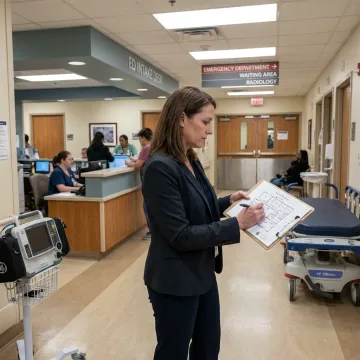
EMD reviews both the built environment and daily operations. This includes entrances, emergency department access, waiting areas, parking, CCTV coverage, locks, doors, visitor flow, after-hours access, alarm systems, emergency communication, lockdown procedures, training, and response protocols. Findings are analyzed against real-world scenarios such as active assailant events, workplace violence, organized targeting, and opportunistic crime.
Which healthcare facilities can benefit from this service?
This service is designed for hospitals, urgent care centers, behavioral health facilities, ambulatory surgery centers, medical office buildings, senior living communities, assisted living facilities, and multi-building healthcare campuses. It is especially valuable for organizations managing high public access, emergency care, vulnerable patient populations, medication storage, infant or pediatric protection, or elevated staff safety concerns.
Does targeted violence mitigation disrupt patient access or care delivery?
A strong mitigation plan should improve safety without unnecessarily disrupting care. EMD evaluates security measures in the context of patient flow, emergency access, clinical operations, visitor expectations, and staff efficiency. Recommendations may include layered access controls, better wayfinding, improved surveillance placement, refined visitor management, and operational procedures that protect people while supporting the healthcare mission.
Can EMD help with workplace violence prevention standards?
Yes. EMD’s healthcare security consulting includes workplace-violence prevention considerations aligned with environment-of-care priorities and healthcare security operations. The work may address emergency department exposure, behavioral health unit risk, staff duress concerns, visitor screening, incident response, training gaps, and physical design measures that reduce opportunities for escalation or targeted harm.
What is included in a healthcare security vulnerability assessment?
A healthcare vulnerability assessment typically includes a review of perimeter conditions, entry points, visitor management, emergency department access, behavioral health safety, infant or pediatric protection, medication storage, CCTV, lighting, doors, locks, alarms, emergency notification, lockdown capability, staff procedures, and training. EMD then provides prioritized recommendations tied to risk reduction, design improvements, and funding opportunities where applicable.
Can mitigation recommendations support grant funding applications?
Yes. EMD’s assessments and recommendations are structured to support grant-aligned security planning when eligible funding opportunities are available. This may include documenting vulnerabilities, developing project narratives, building budgets, preparing worksheets, and connecting recommendations to physical security enhancements such as access control, surveillance, emergency communications, perimeter upgrades, and other target-hardening measures.
Does EMD provide cybersecurity or HIPAA security assessments?
No. EMD’s scope is physical and operational security consulting, not cybersecurity, IT-security architecture, or HIPAA compliance assessments. The work focuses on facilities, access control, surveillance, emergency procedures, workplace-violence prevention, active assailant risk, visitor management, and security design. Healthcare organizations can use EMD’s findings alongside separate IT, privacy, and compliance programs.